
About 'Strangers to Ourselves'
A book recommendation

This is a book recommendation, not a review. If I were writing a review of Rachel Aviv’s Strangers to Ourselves: Unsettled Minds and the Stories That Make Us, it might start like this:
What a rare pleasure to be reading a book and become aware, almost from the start, that you’re in excellent hands, that this is a voice you can trust, and learn from. The pleasure is especially rare in writing about mental health, since most parties come with their ideological convictions. There are reductionists, empiricists, pharmacologists, behaviorists, somaticists, existentialists, analysts, rationalists, transpersonalists, psychedelicists, spiritualists, and so on.
But this isn’t a review, so instead I’ll pique your curiosity by telling you how Aviv has organized her book. (Assuming you haven’t already read it; it came out in 2022.)
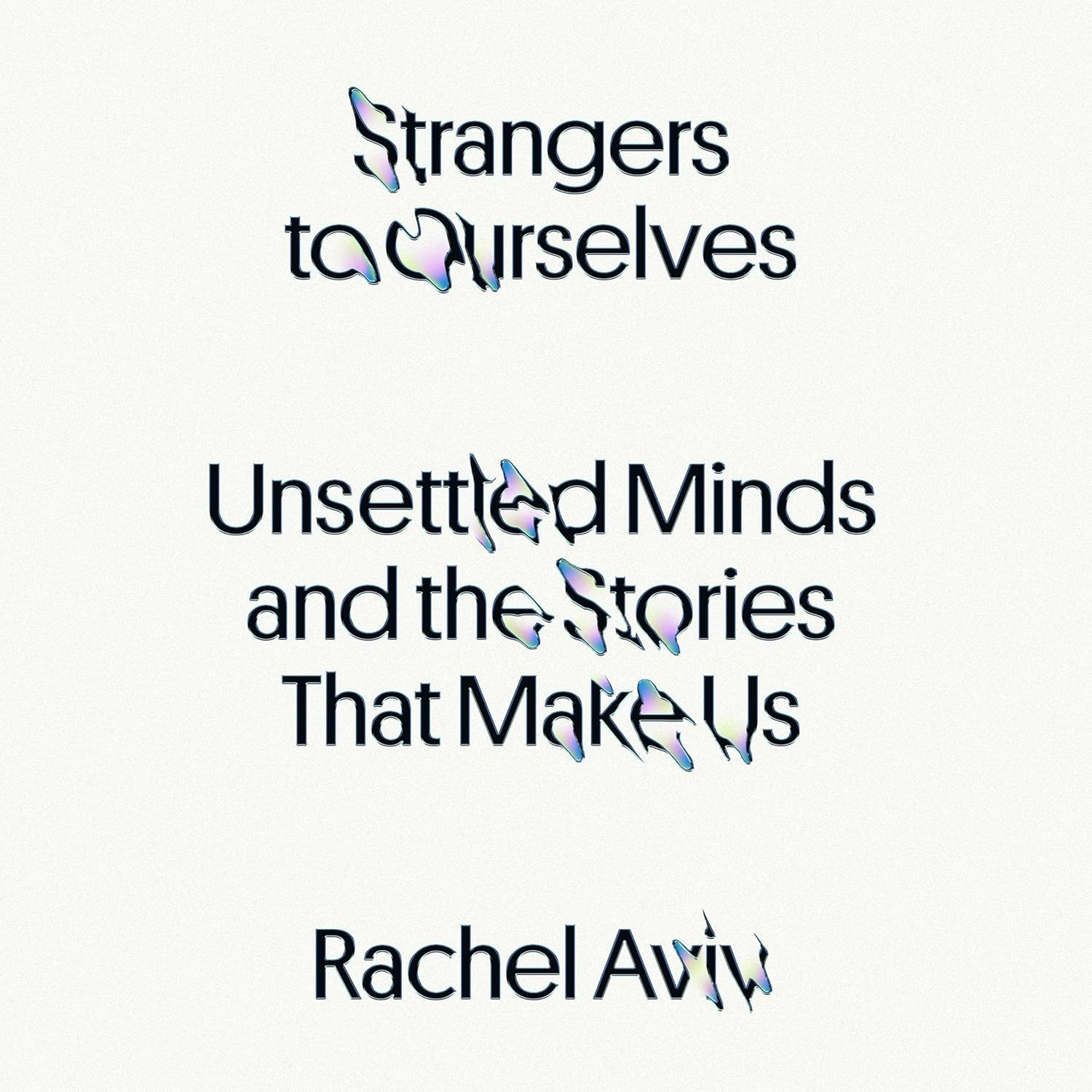
Strangers to Ourselves starts with a Prologue in which the author recounts her anorexia-related symptoms that led to hospitalization at the age of six, and tells of the other girls—and the culture—she met on that ward. Following this are the four main parts of the book. Each is devoted to one person’s experience of mental illness, and to how others experience it, thus shedding light on the larger frames of family, society, politics, and culture in which ‘unsettled minds’ emerge. Each part is named for the person whose story it tells: Ray, Bapu, Naomi, Laura. (Very different people, very different social contexts, very different stories.) The book concludes with a poignant Epilogue about Hava, one of the girls Aviv met on that ward. We learn about Hava’s hard path in the decades since.
The book’s stories are engaging, but what made it such a compelling read for me was the combination of Aviv’s deep research, astute observations, and excellent judgment. In the spirit of the best journalism, she is no ideologue. There is no lumping her with the prescribers or deprescribers, analysts or analyst-skeptics, or any of the other differing viewpoints she explores.
Instead, Aviv explores where the concerned parties (patients, family, clinicians, institutions) are coming from, how others see them, and how they figure in the larger conversation about mental illness. Beginning (and ending) with her own story, Aviv reassures us that she knows from the inside how much that conversation matters. What emerges is a page-turner of a book that is as informative as it is deeply felt and observed—and which shows a rare reverence for the mysteries of the human mind.